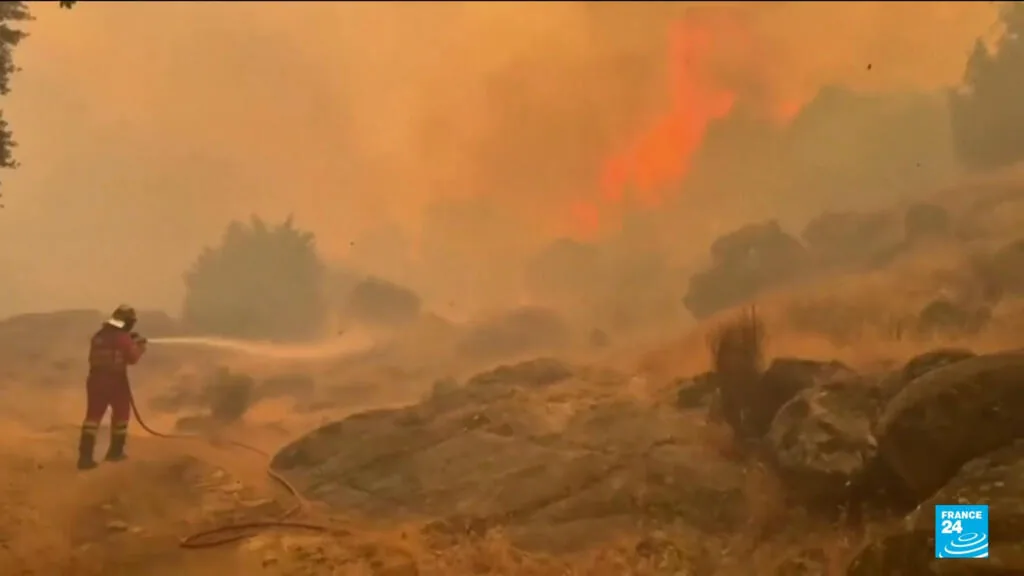
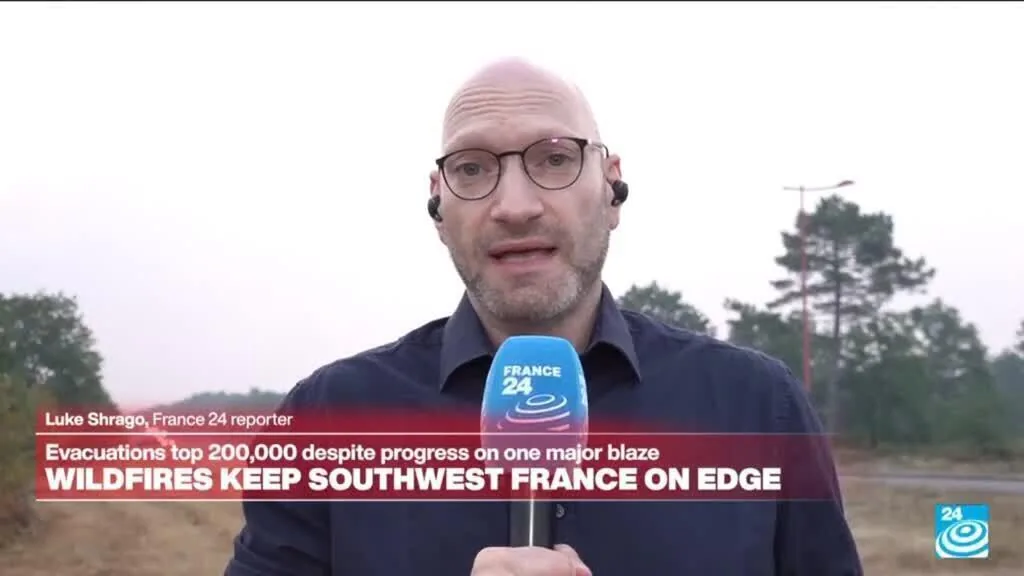
In a summer of record heat waves, France and Spain are now facing wildfires that have forced the evacuations of more than 300,000 people. Scientists say that a sharp swing from wet to dry weather, a signature of climate change, helped fuel the blazes. Although western Europe saw a rainy start to the year, “the summer of 2026 is emerging as one of Europe’s most significant heat and drought events in recent years,” said scientists at World Weather Attribution.
Last month was the hottest June on record in Western Europe, which recorded more than 10,000 excess deaths during an unprecedented heat wave. Fires are now burning near Bordeaux, France, and Madrid, Spain, and have scorched hundreds of thousands of acres in both countries. In some places, towering columns of smoke have even given rise to “fire clouds,” which can generate high winds and lightning strikes that further the spread of fire.
Francesca Di Giuseppe, fire forecast coordinator at the European Centre for Medium-Range Weather Forecasts, said the “rebound” from a wet winter to a dry summer was a key factor. After a rainy winter spurred the growth of vegetation, early summer drought turned that new growth to tinder. So-called weather whiplash has been a driver of other wildfires, including the devastating fires that hit Los Angeles last year.
After seeing record rainfall in early 2024, Los Angeles was faced with a lengthy dry spell that desiccated abundant grasses and shrubs. Scientists say that warmer air holds more moisture, producing both more drought and more extreme rainfall. A paper published last year in Nature Reviews likened the atmosphere to a sponge that is growing larger as the planet warms.
A bigger sponge soaks up more moisture from plants, soils, lakes, and rivers, creating drier conditions on the ground. It also takes longer to fill up before emptying out, leading to longer stretches between bouts of rain. But when the sponge does empty, it unleashes more water, producing more extreme rainfall.
Weather whiplash, said lead author Daniel Swain, a climate scientist at UCLA, “may turn out to be one of the more universal global changes on a warming Earth.” Scientists say that France and Spain are facing an additional complicating factor: the decade-long retreat from rural areas. As farms are abandoned and reclaimed by nature, Europe is seeing the growth of large, unbroken expanses of forest and scrubland that allow fires to spread unchecked. Some experts have called for using controlled burns to clear up dried underbrush, or bringing back wild horses, cattle, and other large grazers to do the same.
ALSO ON YALE E360 Whiplash: How Big Swings in Precipitation Fueled the L.A. Fires




Comentários (0)
Entre ou cadastre-se para comentar.